
When the Body Won’t Let Go: Understanding Persistent Back Stiffness in Athletes
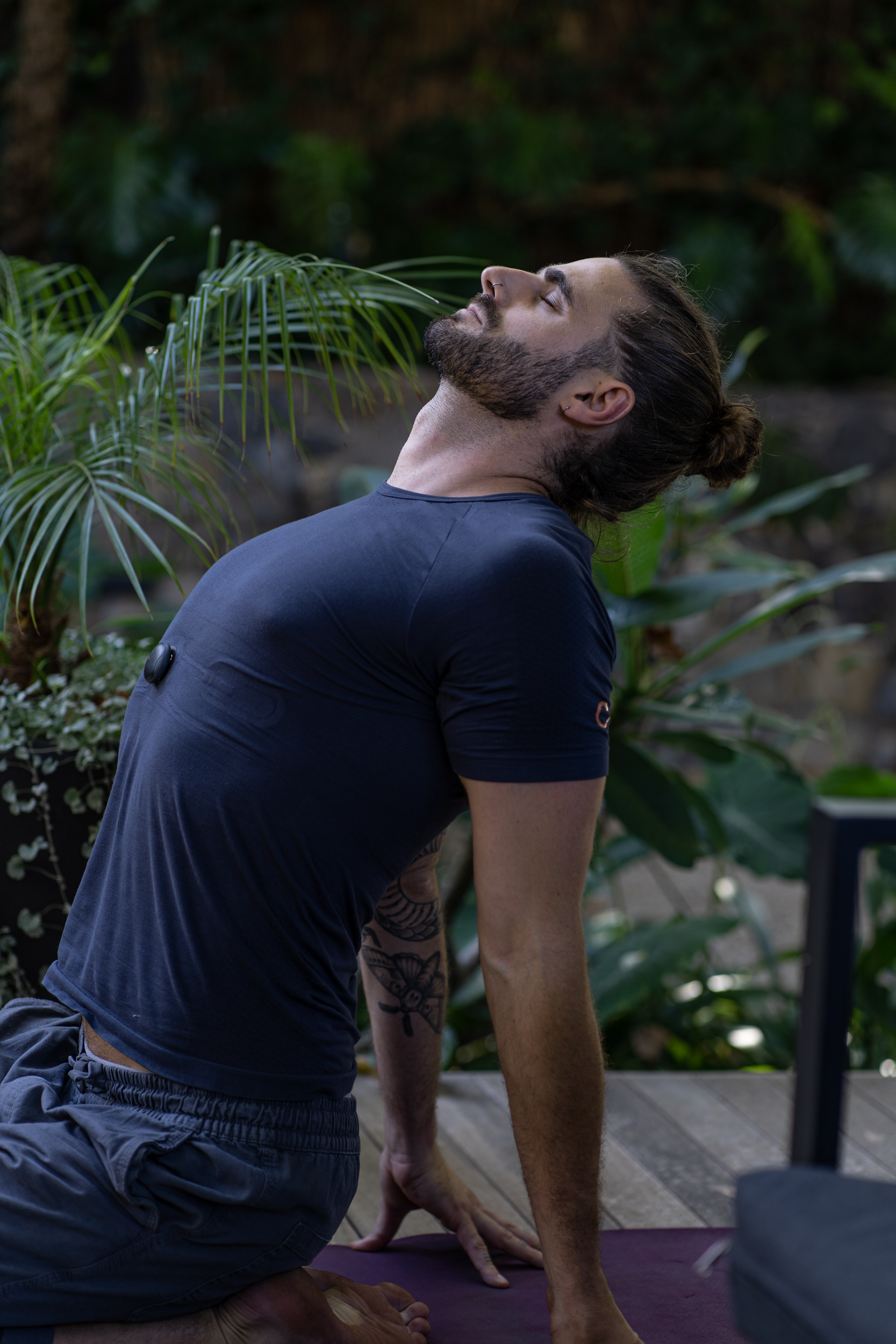
I was recently talking with someone struggling with intense stiffness down the right side of her back. She had already tried massage, chiropractic treatment and multiple physical approaches, yet her body still seemed unable to fully release.
This is something I see often - not just in elite athletes, but in high-performing people generally.
When a muscle stays tight despite repeated treatment, we have to begin asking a different question.
Not:
“What is wrong with the muscle?”
But:
“What is the nervous system trying to protect?”
The body is not simply mechanical. Muscles are deeply influenced by the brain, the autonomic nervous system, emotions, breathing patterns, stress hormones and perceived threat.
And in athletes, particularly those under pressure, the body can become trapped in a state of protective bracing.
The Athletic Nervous System
Golf places enormous rotational demand through the spine, rib cage, diaphragm and thoracolumbar fascia.
Over time, the body can become stuck in:
over-stabilisation
protective guarding
asymmetrical loading
breath restriction
chronic sympathetic activation (“fight or flight”)
Many athletes unconsciously live in a constant “ready position.”
Their nervous system never fully powers down.
The muscles become less flexible not because they are weak, but because the brain perceives tension as safer than letting go.
This is why some people experience only temporary relief from:
massage
manipulation
stretching
foam rolling
The nervous system simply re-applies the tension afterwards.
Could There Be an Emotional Component?
Possibly.
But I think we have to be careful not to become overly symbolic or reductionist.
I don’t believe pain means:
“You’re carrying the weight of the world,”
or that every right-sided symptom has a fixed emotional meaning.
However, I do see clear patterns clinically.
High performers often carry:
fear of failure
perfectionism
pressure to maintain identity
frustration
suppressed emotion
hypervigilance around body sensations
difficulty resting
over-control
The right side of the body is sometimes associated with action, doing and performance energy, but I would hold that lightly rather than as a fact.
More importantly, I would ask:
“What happens in your body when you feel you cannot afford to fail?”
Because muscles tighten under threat.
And pressure is interpreted by the nervous system as threat.
Why Breathing Matters
One of the most overlooked causes of thoracic and upper back stiffness is restricted breathing.
If the diaphragm becomes tight or underused, the neck, shoulders, spinal muscles and fascia begin compensating.
People stop expanding fully into the ribs and back body.
This creates:
reduced rib mobility
thoracic rigidity
overactive paraspinals
protective tension patterns
Ironically, many athletes breathe less efficiently under stress.
Restoring movement to the breath often restores movement to the spine.
Gentle Reset Practices for Acute Stiffness
If you are preparing for competition or recovering from chronic tension, aggressive treatment is not always the answer.
Often the body needs:
safety
rhythm
breath
movement variability
nervous system down-regulation
rather than more force.
1. Long Exhale Breathing (Parasympathetic Reset)
This helps reduce sympathetic activation and decrease muscular guarding.
Instructions
Sit or lie comfortably.
Place one hand on your chest and one on your ribs or abdomen.
Breathe in gently through the nose for 4 seconds.
Breathe out slowly through the mouth for 8 seconds.
Do not force the inhale.
Allow the exhale to feel soft and gradual.
Repeat for 5–10 minutes.
The long exhale signals safety to the nervous system and often reduces muscle tone surprisingly quickly.
2. Crocodile Breathing (Posterior Rib Expansion)
This is excellent for thoracic stiffness and golfers who overuse spinal muscles.
Instructions
Lie on your stomach.
Rest your forehead on your hands.
Relax your shoulders and jaw.
As you breathe in through the nose, imagine expanding the breath into your lower ribs and back body.
Feel the floor gently pressing back against you.
Breathe out slowly and fully.
Do not force deep breaths.
The goal is expansion and softness, not effort.
Practice for 3–5 minutes.
3. Side-Lying Rib Expansion
Helpful when stiffness is mostly one-sided.
Instructions
Lie on the non-painful side.
Place a pillow under your head.
Wrap your top arm around your ribs if helpful.
Breathe slowly into the tight side of the rib cage.
Imagine creating space between the ribs.
Use slow, relaxed exhales.
Stay for several minutes.
Often the body responds better to gentle awareness than aggressive stretching.
4. Gentle Thoracic Movement
The nervous system likes movement that feels safe and fluid.
Avoid forcing range.
Helpful movements include:
cat/cow
thread the needle
open book rotations
walking with relaxed arm swing
gentle spinal rotations with breath
Think:
“Invite movement.”
Not:
“Force release.”
5. Orienting and Nervous System Safety
Before competition, athletes can become highly threat-focused internally.
The body then tightens further.
Orienting helps bring the nervous system back into the present environment.
Instructions
Slowly look around the room.
Let your eyes land on neutral or pleasant objects.
Notice colours, shapes and light.
Feel your feet on the floor.
Unclench your jaw.
Allow your shoulders to soften.
Take slower exhales.
This sounds simple, but it is profoundly regulating.
Sometimes the Body Is Protecting Performance
Many athletes become frightened by tightness itself.
They think:
“If this doesn’t go away, I won’t perform.”
That fear increases vigilance.
Vigilance increases muscle tone.
The body then braces harder.
Sometimes the shift begins when the athlete stops fighting the symptom and starts listening to it differently.
Not as weakness.
Not as failure.
But as a nervous system asking for safety, recovery and regulation.
The goal is not always to “release” the body.
Sometimes it is to convince the body it no longer needs to hold on so tightly.