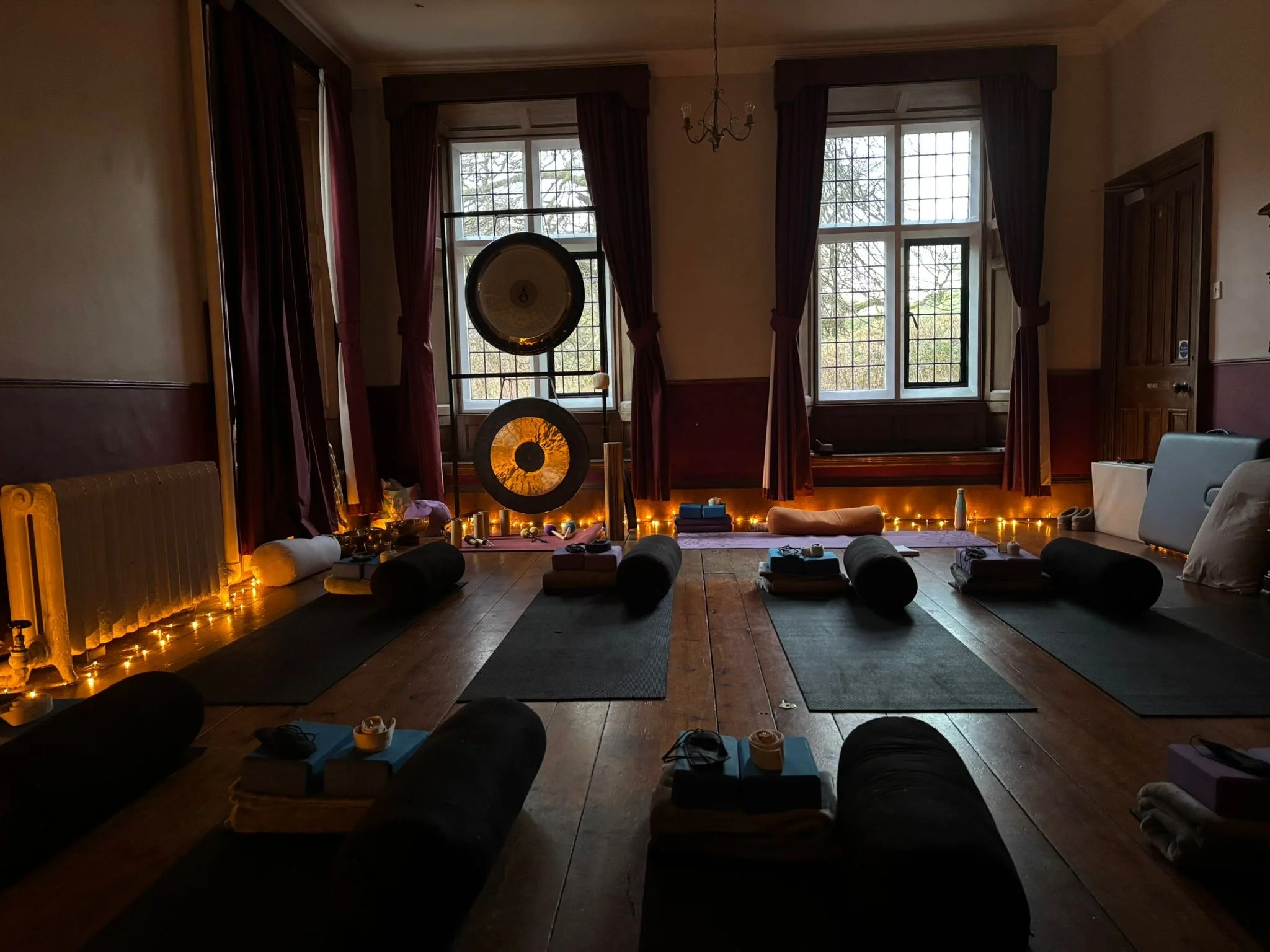
Graduation Project & The March Health Restoration Retreat

Why this retreat meant more than ever this year…
In March I delivered our annual Health Restoration Retreat, and this year it held particular meaning for me personally and professionally, as the retreat also formed part of my graduation project for my Conscious Connected Breathwork training.
This meant I approached the weekend not only as a facilitator, but as a student of the nervous system, carefully designing each session with a clear intention:
to create a retreat that truly supports regulation, restoration, and safety in the body.
This blog is a reflection on the project, the retreat itself, and what I learned from the experience.
Designing the Retreat as a Nervous System Experience
For my graduation project I chose to focus on how breathwork can be used in a trauma-informed, titrated, and regulating way, rather than as something intense or cathartic.
The aim was simple:
Not to push people to release
but to help the nervous system remember how to feel safe.
Each morning session was carefully structured to follow a progression across the weekend.
Day 1 focused on safety and orientation
Day 2 focused on capacity and emotional regulation
Day 3 focused on restoration and integration
This approach was based on polyvagal theory, somatic therapy principles, and my clinical work as a mental health nurse and trauma therapist.
As part of the project, I delivered the same session three times each morning to different groups, allowing me to observe how different nervous systems respond to the same practice, and how important pacing, choice, and permission really are.
Day 1 – Teaching the Body It Is Safe to Be Here
The first morning was not about going deep.
It was about arriving.
We worked with slow coherent breathing, gentle orientation, and grounding practices designed to support vagal regulation.
The key message was:
We are not trying to feel better
we are helping the body feel safe enough to settle.
For many people, rest can feel unfamiliar when the nervous system has been living in threat for a long time.
Starting with safety rather than intensity sets the tone for the whole retreat.
Day 2 – Building Capacity, Not Pushing Limits
The second morning focused on expanding the nervous system’s ability to tolerate activation without becoming overwhelmed.
We explored practices such as the physiological sigh, ratio breathing, and pendulation — moving gently between activation and regulation.
This is where breathwork becomes powerful in a therapeutic sense.
Not because it forces release,
but because it teaches the body that it can move and come back.
That is regulation.
That is resilience.
Day 3 - Rest, Integration, and Repair
The final morning focused on restoration.
True restoration happens when the nervous system can enter parasympathetic dominance — the state where digestion, immune function, sleep, and repair take place.
Many people rarely reach this state in daily life.
Extended exhale breathing, guided rest, and gentle imagery were used to support the body into a deeper level of settling, without overwhelm.
The aim was not to create an experience.
The aim was to allow the nervous system to complete a cycle.
The Power of the Whole Retreat Experience
One of the strongest themes in the feedback was that it wasn’t any single activity that made the retreat special.
It was the combination.
Breathwork
Yoga
Sound
Treatments
Sauna and cold water
Nature
Connection
Rest
Time away from daily demands
Participants repeatedly described the weekend as:
deeply restorative
peaceful
grounding
calming
a reset
bringing them back into their body
Many also reported improved sleep, reduced anxiety, and a sense of feeling more like themselves again.
This tells me that the retreat structure is working as intended.
Not as entertainment.
Not as a quick fix.
But as a nervous-system experience.
Breathwork as a Core Part of the Work
This year breathwork felt like a central element of the retreat.
Several people described it as transformative, powerful, or taking them to a deeper level of relaxation.
For me, this reinforced something important.
Breathwork can be profound when it is delivered with:
safety
pacing
choice
containment
understanding of the nervous system
Without those things, it can overwhelm.
With them, it can restore.
What the Feedback Taught Me
The feedback from this retreat was overwhelmingly positive, with many people saying they would not change anything.
Where suggestions were made, they were helpful and clear:
Slightly slower pacing for some participants
More integration time between sessions
More outdoor time and group walks
Opening and closing rituals to create more containment
Practical improvements to venue facilities
Interestingly, these suggestions all fit with the same principle:
Regulation happens when the nervous system has enough time, enough safety, and enough choice.
This fits perfectly with the approach I was exploring in my graduation project.
Why This Retreat Matters to Me
I have worked in mental health for many years, and one thing I have learned is that people don’t restore through talking alone.
The body needs to feel safe.
The nervous system needs to settle.
People need time away from pressure, roles, and responsibility.
This retreat allows that to happen.
Not by accident.
By design.
This year, being able to combine my clinical background, my breathwork training, and the retreat experience into my graduation project felt incredibly meaningful.
It confirmed something I have believed for a long time:
When we work with the nervous system with respect, pacing, and understanding, real restoration is possible.
Looking Ahead
The feedback from this retreat will shape the next one.
We will keep what works.
We will slow where needed.
We will continue to build retreats that support health, not just relaxation.
And I will continue to develop this work, combining breathwork, somatic therapy, and nervous-system science in a way that is safe, grounded, and deeply human.
Because healing does not come from pushing.
It comes from allowing the body to remember that it survived.